
Key Info
Bachelor of Science in Nursing (Intellectual Disability)
If you are an individual who enjoys working with people who seek to understand how humanistic, legalistic, psychological and sociological factors, which impact health and wellbeing of people with intellectual disability and their families, and respond accordingly, then this programme may be for you.
Why Study Intellectual Disability Nursing at UL?
The BSc. Nursing (Intellectual Disability) full-time four year degree programme is offered by the Department of Nursing & Midwifery, University of Limerick in conjunction with ‘AVÍSTA’ a service that supports people with disabilities. The Nursing and Midwifery Board of Ireland has approved the BSc Nursing (Intellectual Disability) programme. The theoretical component of the programme offers the diversity of a small class size for discipline specific modules and large class size for modules shared with other nursing and midwifery disciplines. Clinical Skill Laboratory/Tutorial sessions compliment many classroom lectures. Additionally, throughout the four years of the programme a wide range of practice placement experiences are incorporated including early intervention, day-service, residential, respite and community settings. On successful completion of the programme, you will be able to present for registration with the Nursing and Midwifery Board of Ireland and practice as a Registered Nurse Intellectual Disability (RNID).
The BSc. Nursing (Intellectual Disability) is designed to equip you with the knowledge, skills and attitudes required to become an analytical and reflective practitioner, capable of providing compassionate, caring and committed approaches to supporting people with intellectual disabilities and their families. The programme based on a philosophy of inclusion, empowerment and valuing people, enables the integration of humanistic, scientific and research based principles to enhance your knowledge and understanding of physical, emotional, cognitive, social and spiritual needs of persons with intellectual disabilities.
Learn more about our courses and upcoming events
What you will study
The programme is offered full time over four years.The curriculum encompasses the development of theory and practice simultaneously, with the programme structured as follows:
- 63 weeks Theory (minimum)
- 45 weeks un-rostered clinical placement
- 36 weeks internship.
Nursing is a demanding profession both physically and emotionally. Successful applicants must be of good health and have the ability to achieve the required competencies of a nurse. Offers of places on the nursing programmes are subject to satisfactory completion of a health declaration/medical assessment and vaccination programme.
| CODE | SEMESTER 1 | CODE | SEMESTER 2 | |
| NM4131 | Shared Module: Promoting Safety within a Healthcare Context |
NM4171 | Practice Placement 1 | |
| NM4121 | Shared Module: Foundations for Engaged Learning |
NM4092 | Shared Module: Introduction to Health and Health Promotion |
|
| NM4241 | Understanding Intellectual Disability | NM4252 | Introduction to Support Strategies across the Lifespan | |
| NM4251 | Sphere and Practice of the RNID | NM4152 | Shared Module: Biological Sciences applied to Nursing & Midwifery 2 |
|
| NM4151 | Shared Module: Biological Sciences applied to Nursing & Midwifery 1 |
PS4062 | Shared Module: Introduction to Psychology applied to Nursing and Midwifery |
|
| NM4161 | Shared Module: Communication and Interpersonal Relationships in Nursing & Midwifery |
| CODE | SEMESTER 3 | CODE | SEMESTER 4 | |
| NM4172 | Practice Placement 2 | NM4193 | Practice Placement 3 | |
| NM4103 | Intellectual Disability Early Childhood Nursing | NM4134 | Intellectual Disability Adult Nursing | |
| NM4263 | Intellectual Disability Adolescent Nursing | NM4144 | Intellectual Disability Older Adult Nursing | |
| NM4173 | Shared Module: Biological Sciences applied to Nursing & Midwifery 3 |
NM4243 | Shared Module: Nursing Individuals living with Long Term Conditions |
|
| NM4183 | Shared Module: Principles of Infection Prevention & Control for Nurses and Midwives |
NM4104 | Shared Module: Law and Ethics for Nursing and Midwifery Practice |
|
| NM4022 | Shared Module: Pharmacology for Nurses and Midwives |
S04014 | Shared Module Sociology of Health and Illness for Nursing and Midwifery |
|
| NM4115 | Practice Placement 4 |
| CODE | SEMESTER 5 | CODE | SEMESTER 6 | SUMMER |
| NM4125 | Practice Placement 5 | NM4076 | Shared Module: Nursing in Primary and Community Settings |
|
| NM4086 | Shared Module: Research and Evidence in Healthcare |
|||
| NM4036 | Meeting and Supporting the Person with Intellectual Disability and Complex Needs |
|||
| NM4046 | Supporting the Person with Intellectual Disability in Challenging Behavioral or Mental Health Situations | |||
| NM4116 | Shared Module: Transition towards a Competent Practitioner |
| CODE | SEMESTER 7 | CODE | SEMESTER 8 | SUMMER |
| NM4126 | Practice Placement 6 | NM4097 | Practice Placement 7 | |
| NM4067 | Shared Module: Practice Research Project |
NM4008 | Practice Placement 8 | |
| NM4077 | Shared Module : Leading and Managing in Quality Practice |
|||
| NM4137 | Envisioning the Future Role and Practice of the RNID |
|
Entry requirements
| CAO points history |
328†
|
|---|---|
| Minimum grades |
Applicants are required to hold at the time of enrolment the established Leaving Certificate (or an approved equivalent) with a minimum of six subjects which must include: Two H5 (Higher level) grades and Four O6 (Ordinary level) grades or four H7 (Higher Level) grades. Subjects must include Mathematics, Irish or another language, and English. Enquiries about the methods of evaluation of results of examinations and qualifications other than the Republic of Ireland Leaving Certificate Examination should be addressed to the Admissions Office of UL. |
| Subject requirements |
In addition applicants must hold an O6/H7 grade in one of the following Laboratory Science subjects: Biology; Physics, Chemistry; Physics and Chemistry; or Agricultural Science. |
| Additional considerations |
QQI EntryCertain QQI Awards are acceptable in fulfilling admission requirements for this programme. Go to the UL Admissions QQI page for a full list of modules. Mature StudentsApplicants who wish to be considered for a place on the grounds of mature years must satisfy Bord Altranais agus Cnáimhseachais na hÉireann as to their suitability by means of an assessment test. Mature applicants should be 23 years old on or before January 1st of the year of enrolment. Mature applicants must apply through the Central Applications Office (CAO) by 1 February. Application information for mature student applicants (PDF) In addition to the CAO application, mature applicants must also register for an assessment test with the Nursing and Midwifery Board of Ireland. Mature applicants may also be considered on the basis of educational qualifications. Such applicants should also consult the booklet: Nursing and Midwifery A Career for You, published by the Nursing Careers Centre, An Bord Altranais agus Cnáimhseachais na hÉireann Tel +353 (0)1 6398500 Website: www.nursingcareers.ie |
| Non-EU Entry Requirements |
|
How to apply
| Where are you applying from? | How to Apply |
|---|---|
| Ireland | Irish students must apply to UL via the CAO. More information can be found here. |
| The UK | Students who have completed their A-Levels can apply to UL via the CAO. More information can be found on the Academic Registry website. |
| The EU | EU Students can apply to UL via the CAO. More information can be found on the Academic Registry website. |
Fees and funding
Student course fees are broken into three components - Student contribution, Student Levy and Tuition Fees.
A number of illustrative examples of fees for this course based on the current fee levels have been set out in the tables below.
An explanation of the components, how to determine status and the criteria involved is provided below the examples as is a list of possible scholarships and funding available.
EU Students with Free fees status in receipt of a SUSI grant
| HEA pays | Tuition Fees | €4,106 |
| SUSI pays | Student contribution | €3,000 |
| Student pays | Student Levy | €100 |
| €7,206 |
EU Students with Free fees status not in receipt of a grant
| HEA pays | Tuition Fees | €4,106 |
| Student pays | Student contribution | €3,000 |
| Student pays | Student Levy | €100 |
| €7,206 |
Students with EU fee status not in receipt of a grant
| Student pays | Tuition Fees | €4,106 |
| Student pays | Student contribution | €3,000 |
| Student pays | Student Levy | €100 |
| €7,206 |
Non-EU Students
| Student pays | Tuition Fees | €26,800 |
| Student pays | Student Levy | €100 |
| €26,900 |
Student course fees are comprised of the following components:
Student Contribution
Annual charge set by the government for all full-time third level students. All students are liable unless they have been approved for a grant by Student Universal Support Ireland (SUSI). Please refer to https://www.studentfinance.ie to determine your eligibility for a grant and for instructions on how to apply. The current student contribution is set at €3000.
Student Levy
All students are liable to pay the Student Levy of €100. Please note the Student Levy is not covered by the SUSI Grant.
Tuition Fees
These are based on Residency, Citizenship, Course requirements.
Review the three groups of criteria to determine your fee status as follows
-
Residency
- You must have been living in an EU/EEA member state or Switzerland for at least 3 of the 5 years before starting your course
-
Citizenship
- You must be a citizen of an EU/EEA member state or Switzerland or have official refugee status
-
Course Requirements
(all must be met)
- You must be a first time full-time undergraduate (Exceptions are provided for students who hold a Level 6 or Level 7 qualification and are progressing to a Level 8 course in the same general area of study).
- You must be undertaking a full-time undergraduate course of at least 2 year’s duration
- You cannot be undertaking a repeat year of study at the same level unless evidence of exceptional circumstances eg serious illness is provided (in which case this condition may be waived)
Depending on how you meet these criteria your status will be one of the following -
- Free Fee Status: You satisfy all three categories (1, 2 and 3) and therefore are eligible for the Higher Education Authority’s Free Fees scheme.
- EU Fee Status: You satisfy both the citizenship and residency criteria but fail to satisfy the course requirements and are liable to EU fees.
- Non EU Fee Status: You do not meet either the citizenship or residency criteria and are therefore liable to Non EU fees.
More information about fees can be found on the Finance website
These scholarships are available for this course
| Title | Award | Scholarships Available |
|---|---|---|
| Edith and Leslie Downer Entrance Scholarship | €1,000 | 1 |
| Johnson and Johnson WiSTEM2D Programme |
These scholarships are available for all courses
| Title | Award | Scholarships Available |
|---|---|---|
| All Ireland Scholarships - sponsored by J.P. McManus | €6,750 | 125 |
| Cooperative Education Award | 1 medal per faculty | |
| Elaine Fagan Scholarship | €5,000 | 5 |
| Financial Aid Fund | ||
| Higher Education Grants & VEC Grants | ||
| Paddy Dooley Rowing Scholarship | €2,500 | |
| Plassey Campus Centre Scholarship Programme | ||
| Provincial GAA Bursaries Scheme | €750 | |
| Stuart Mangan Scholarship | ||
| The Michael Hillery and Jacinta O’Brien Athletics Scholarship | Various benefits equating to over €7,000 in value | |
| UL Sports Scholarships | Varies depending on level of Scholarship | Multiple |
Your future career
Employability skills from this degree
- Flexibility
- Adaptability
- Empathy
- Organisational skills and time management
- Leadership
- Determination and tenacity
- Conducting research
- Utilising research and evidence-based practice
- Problem-solving and decision-making
- Collaboration
- Working in partnership with different disciplines
- Teamwork
- Compassion
- Professional responsibility and accountability
Further Study Options
- Postgrad Dip in Nursing
- Nursing (Conversion to Adult)
Job titles of graduates with this degree
Graduates progressing directly into employment take up a wide variety of roles. The following provides a sample of initial roles listed on the Graduate Outcomes Survey by graduates approximately one year after graduation:
- Autism Nurse
- Disability Nurse
- Care Nurse
- Home Help Carer
- Geriatric Nurse
- Social Care Worker
- Community Nurse
Student Profiles
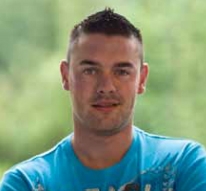
Thomas Dawson
This course interested me because there’s a good mix between theory/college work and practical work in the clinical labs, and in the amount of placement time spent working in hospitals and care centres. Placements were a huge benefit to me as everything you learn in lectures and from textbooks make more sense when you see it and do it for real.
The course is very enjoyable and you’ll meet new friends and colleagues out in the work place. I enjoyed working with people with an intellectual disability and making a difference in their lives, no matter how small. This course at UL equipped me with the knowledge and skills to do that.
Caoimhe Moloney
I chose this course because there was a strong mix of both theory and practice-based learning. Placement occurs every year of the course. Throughout the 4 years you are able to put into practice the skills learnt in lectures and in the clinical skills labs and then out on placement in both community and residential settings.
During this course you will also meet other cohorts while on placement or in the Health Science Building and everyone works together creating a lovely atmosphere and becoming colleagues once graduated. I thoroughly enjoyed this course. UL gave me the skills and competence to work with people with an intellectual disability.