Key Info
Bachelor of Science in Sport and Exercise Sciences
This programme will give you an in- depth knowledge and understanding of the key elements of sport, exercise, health and physical activity from the perspective of the sciences. Throughout the programme, you will study the science behind safe participation and effective performance in physical activity and sport.
The application of science plays a major role in the preparation of the modern sports performer. The effects of training methods on the physiological systems of the body for improving strength, speed, endurance, skill and how to perform under stress are constantly being investigated and improved upon by sport scientists.
The application of science however is not reserved for elite performers. It is well recognised that lack of exercise or physical activity plays a major role in many diseases that affect us e.g. cardiovascular disease, obesity, high blood pressure, type 2 diabetes, osteoporosis and certain cancers. In addition to improving performers, sport and exercise scientists are also engaged in examining the effects of various types of exercise programmes and activities on health and also on the treatment and prevention of disease by means of physical activity. They are also concerned with the psychological bene ts of exercise and with how to motivate people to exercise frequently and regularly.
Learn more about our courses and upcoming events
What you will study
The Bachelor of Science in Sport and Exercise Sciences is a four-year programme which includes an eight- month period of work experience (Cooperative Education) in relevant work placements during the third year.
The first year of the course provides a transition and immersion into the Sport and Exercise Sciences. You will undertake broad modules under the themes of “What makes an Olympic Champion?”, “Why is exercise good for health?” and “What are the determinants of human performance?”. These themes are explored under each of the core disciplines within Sport and Exercise Science including physiology, anatomy, psychology, biomechanics and coaching science and provide a foundation for these and other disciplines such as mathematics and physics which enable deeper understanding in years 2, 3 and 4.
Laboratory experience is an integral part of each of these core areas of study where you will test concepts and theories and acquire laboratory and research skills. In the first two years, you will study and experience selected sports and modes of exercise and training.
Here, you will have an opportunity to improve personal performance and prepare for coaching awards and certification. In second year an elective subject is selected and you will take two modules in either Law or Computer Science. You will undertake a project in your final year on a topic related to an aspect of sport and exercise science.
All SES students during their lab and project work will be handling and processing human blood/bodily fluids and are at risk of infection. Immunisation against Hepatitis B should be regarded as one part of a good infection control practice, which include hand washing and correct use of appropriate PPE and training. PESS recommend students should get the Hepatitis B vaccination to reduce the risk of this type of infection. Students can get this done via their own doctor or by limerick clinic EHA Limerick---Students to bear the cost of the vaccination. Contact PESS Chief Technical Officer Stephen.clothier@ul.ie if you need further assistance.
| Semester 1 | Semester 2 |
| Coaching Science & Performance 1 | Exercise & Fitness |
| Functional Anatomy | Introduction to Biomechanics for Sport & Exercise |
| Human Physiological Systems for Sport & Exercise Science | Scientific Perspectives of Sport & Exercise Psychology |
| Sport & Exercise Sciences: Transition | Sport & Exercise Sciences: Immersion |
| Science Maths 1 | Introduction to Information Technology |
| Physics for General Science 1 | Introductory Biochemistry |
| Semester 3 | Semester 4 |
| Coaching Science & Performance 2 | Coaching Science & Performance 3 |
| Quantitative Biomechanical Analysis | Sports Injuries |
| Physiology Muscle in Movement | Support Systems to Muscle Contraction |
| Science Maths 3 | Psychology of Movement: Development from Infancy to Adolescence |
|
Choose 1: |
Choose 1: |
| Principles of Law | Sport and Law |
| Business Information Systems | Business Information Technology 1 |
| Broadening Modules | Broadening Modules |
| Semester 5 | Semester 6 |
| Quantitative Biomechanical Analysis | Cooperative Education 1 |
| Nutrition, Exercise Metabolism & Sports Performace | Cooperative Education 2 |
| Perception & Cognition in Action | |
| Fundamental Concepts of Human Research & their Application |
| Semester 7 | Semester 8 |
| SES Project A | SES Project B |
| Choose 3: | Choose 2: |
| Applied Sports Biomechanics | Sports Biomechanics Innovation |
| Sport and Health Performance Evaluation | Exercise is Medicine - Exercise Psychology |
| Exercise is Medicine - Disease Prevention | Exercise is Medicine - Clinical Applications |
| Applied Sport Psychology | Advanced Practices in Strength and Conditioning |
Frequently Asked Questions
For details on the application and assessment processes for mature students, please see the Admissions Office webpage or contact the Admissions Office directly - www.ul.ie/admissions-askus or Phone: 061-202015).
Information on how mature applications are assessed are also available in Section 7 of the Mature Student Handbook.
The number of mature students taken each year varies pending on the quality and number of applications; it can range from 8 - 12.
There are no exemptions for PLC programmes.
Maths
Once you have the minimum requirement (at leaving cert B3 in ordinary or D3 in higher) you will be able to handle the maths modules. There is also a Maths Learning centre where you can get extra tuition for free.
Physics
There is quite a number of students who come to the Sport and Exercise Sciences programme without Physics in their leaving cert and they manage very well. Again, there is a Science Learning centre which provides free tuition.
Yes, there is a focus on nutrition for sport a specific module is dedicated to this, also it is a key strand which runs throughout the programme.
After the degree it is possible to do a Professional Masters of Education - Physical Education Teaching at UL to become a Physical Education Teacher; however, a number of challenges exist. The only programme in Ireland that has gained Teaching Council approval as a preparatory course for the Professional Masters of Education - Physical Education Teaching is IT Tralee. The Sport and Exercise Science courses do not contain the content knowledge, applied and theoretical, to teach physical education across both the junior and the senior cycle in schools. Since the Professional Masters of Education is strictly a pedagogy course it assumes/requires that students come in with this knowledge.
You apply to both the Teaching Council in Athlone (part of the Department of Education) and UL to gain entry to the Professional Diploma. UL will hold interviews regarding suitability and the Teaching Council will identify practical areas such as dance, gymnastics and aquatics. These can be made up at UL or at other institutions such as UCC. However, these can only be offered if the student has been offered a place on the course. With the new Teaching Council guidelines this requires students to make up the missing modules the year prior to starting the course and with the Professional Diploma now 2-years it will take students 3 years in total to be certified to teach physical education.
It is important to note that MSc courses in physiotherapy are specially designed for graduates in other disciplines. Admission to these courses is not automatic. In addition to getting a good honours degree, candidates must usually pass an interview.
Entry to Physiotherapy training and sports rehabilitation with two years taught MSc programmes at universities in the UK is possible. e.g. the University of Edinburgh, University of Middlesbrough, University of Southampton, University of Salford, King's College London, Glasgow Caledonian University, University of Brighton, Robert Gordon Univ., Aberdeen.
No, you would not have to take up a sport. In two of the sport performance modules, you do study and learn about a sport (e.g. athletics, Gaelic football, hurling/camogie, rugby, and hockey) and in some cases there is an opportunity to get a certificate but you do not have to take up a sport. Many of the students do play sports (some at the highest levels) but some do not. A main criterion for the degree programme is that you like or have an interest in sport and/or exercise and that you also have a liking for science. You do not have to be outstanding in either sport or science but you must not dislike either.
The core science subjects that are studied in the programme are Exercise Physiology, Biomechanics and Psychology. Physics and Maths are preparation for these. A feature of the programme is the number of laboratory sessions, hands-on experience and project work that you get which greatly helps understanding and applications.
After the degree it would be possible to do the Professional Masters of Education - Physical Education (PME PE) at UL to become a Physical Education qualified teacher. However, SES graduates will have to complete certain modules to meet the Teaching Council entry requirements for this course. Please, send an email to the course director Dr Antonio Calderón, to find out more about this pathway to PE teaching.
Entry requirements
| CAO points history |
485
|
|---|---|
| Minimum grades |
Applicants are required to hold at the time of enrolment the established Leaving Certificate (or an approved equivalent) with a minimum of six subjects which must include: Two H5 (Higher level) grades and Four O6 (Ordinary level) grades or four H7 (Higher Level) grades. Subjects must include Mathematics, Irish or another language, and English. Note: Grade F6 in Foundation Mathematics also satisfies the minimum entry requirements. Foundation Maths is not reckonable for scoring purposes. |
| Subject requirements |
In addition, applicants must hold an O3/ H7 grade in any one of the following: Applied Mathematics, Physics, Chemistry, Physics with Chemistry, Physical Education, Agricultural Science, Biology and Physical Education. |
| Additional considerations |
While a high level of sports performance and achievement is not required, it is essential that you should like science, along with sport, exercise and physical activity. We welcome applications from mature students. Mature applicants must apply through the Central Applications Office (CAO) by 1 February. |
| Non-EU Entry Requirements |
|
How to apply
| Where are you applying from? | How to Apply |
|---|---|
| Ireland | Irish students must apply to UL via the CAO. More information can be found here. |
| The UK | Students who have completed their A-Levels can apply to UL via the CAO. More information can be found on the Academic Registry website. |
| The EU | EU students can apply to UL via the CAO. More information can be found on the Academic Registry website. |
| Non-EU country | If you are outside of the EU, you can apply for this degree here. |
Fees and funding
Student course fees are broken into three components - Student contribution, Student Levy and Tuition Fees.
A number of illustrative examples of fees for this course based on the current fee levels have been set out in the tables below.
An explanation of the components, how to determine status and the criteria involved is provided below the examples as is a list of possible scholarships and funding available.
EU Students with Free fees status in receipt of a SUSI grant
| HEA pays | Tuition Fees | €4,262 |
| SUSI pays | Student contribution | €3,000 |
| Student pays | Student Levy | €100 |
| €7,362 |
EU Students with Free fees status not in receipt of a grant
| HEA pays | Tuition Fees | €4,262 |
| Student pays | Student contribution | €3,000 |
| Student pays | Student Levy | €100 |
| €7,362 |
Students with EU fee status not in receipt of a grant
| Student pays | Tuition Fees | €4,262 |
| Student pays | Student contribution | €3,000 |
| Student pays | Student Levy | €100 |
| €7,362 |
Non-EU Students
| Student pays | Tuition Fees | €20,900 |
| Student pays | Student Levy | €100 |
| €21,000 |
Student course fees are comprised of the following components:
Student Contribution
Annual charge set by the government for all full-time third level students. All students are liable unless they have been approved for a grant by Student Universal Support Ireland (SUSI). Please refer to https://www.studentfinance.ie to determine your eligibility for a grant and for instructions on how to apply. The current student contribution is set at €3000.
Student Levy
All students are liable to pay the Student Levy of €100. Please note the Student Levy is not covered by the SUSI Grant.
Tuition Fees
These are based on Residency, Citizenship, Course requirements.
Review the three groups of criteria to determine your fee status as follows
-
Residency
- You must have been living in an EU/EEA member state or Switzerland for at least 3 of the 5 years before starting your course
-
Citizenship
- You must be a citizen of an EU/EEA member state or Switzerland or have official refugee status
-
Course Requirements
(all must be met)
- You must be a first time full-time undergraduate (Exceptions are provided for students who hold a Level 6 or Level 7 qualification and are progressing to a Level 8 course in the same general area of study).
- You must be undertaking a full-time undergraduate course of at least 2 year’s duration
- You cannot be undertaking a repeat year of study at the same level unless evidence of exceptional circumstances eg serious illness is provided (in which case this condition may be waived)
Depending on how you meet these criteria your status will be one of the following -
- Free Fee Status: You satisfy all three categories (1, 2 and 3) and therefore are eligible for the Higher Education Authority’s Free Fees scheme.
- EU Fee Status: You satisfy the citizenship and/or residency criteria but fail to satisfy the course requirements and are liable to EU fees
- Non EU Fee Status: You do not meet either the citizenship or residency criteria and are therefore liable to Non EU fees.
More information about fees can be found on the Finance website
These scholarships are available for this course
| Title | Award | Scholarships Available |
|---|---|---|
| Johnson and Johnson WiSTEM2D Programme |
These scholarships are available for all courses
| Title | Award | Scholarships Available |
|---|---|---|
| All Ireland Scholarships - sponsored by J.P. McManus | €6,750 | 125 |
| Cooperative Education Award | 1 medal per faculty | |
| Elaine Fagan Scholarship | €5,000 | 5 |
| Financial Aid Fund | ||
| Higher Education Grants & VEC Grants | ||
| Paddy Dooley Rowing Scholarship | €2,500 | |
| Plassey Campus Centre Scholarship Programme | ||
| Provincial GAA Bursaries Scheme | €750 | |
| Stuart Mangan Scholarship | ||
| The Michael Hillery and Jacinta O’Brien Athletics Scholarship | Various benefits equating to over €7,000 in value | |
| UL Sports Scholarships | Varies depending on level of Scholarship | Multiple |
Your future career
Employability skills from this degree
- Analysis of research and data
- Ability to work on your own initiative and as part of a team
- Presentation and oral communication skills
- Written communication skills, including report writing
- Time management and planning
- Effective problem-solving
- Professionalism and customer focus
- Information technology
Further Study Options
- Bachelor of Medicine, Bachelor of Surgery (Graduate Entry)
- Doctor of Philosophy
- MA in Business Management
- MSc in Sports Performance
- MSc in Human Nutrition and Dietetics
- MSc in Occupational Therapy
- MSc in Physiotherapy
Job titles for graduates with this degree
Graduates progressing directly into employment take up a wide variety of roles. The following provides a sample of initial roles listed on the Graduate Outcomes Survey by graduates approximately one year after graduation:
- Applied Sports Scientist
- Athlete
- Coach
- Exercise Physiologist
- Fitness Coach
- Healthcare Assistant
- Nutrition Consultant
- Performance Analyst
- Performance Biomechanist
- Performance Consultant
- Personal Trainer
- Rehabilitation Assistant
- Sport Trainer
- Strength and Conditioning Coach
Student Profiles
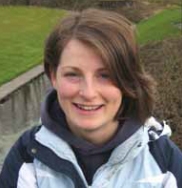
Aimee McInerney
This is a challenging degree. You will gain extensive knowledge in areas such as elite performance, coaching strategies and exercise prescription. For me, the most enjoyable aspect is the practical elements offered throughout each year.
For my co-op placement, I went to the PEAK Centre for Human Performance in Ottawa, Canada. I worked with several clients and trained them to reach their speci c goals. I had to test them, provide consultations, design monthly strength and conditioning programmes and offer a personal training service over three months. My clients included a marathon runner, iron man competitor, and swimmer. It was an amazing experience to work with sports people at both elite and recreational level. Also, the chance to explore a different country was amazing. Canada was one of the best experiences of my life.
Quotes from graduates:
"With a sport and exercise science degree from UL there are so many different options out there. The world is your oyster and the degree provides a good first stepping stone to lots of career options as is evident by the breadth of jobs we are all doing now. Also, these options do not necessarily mean you have to do an MSc or PhD." - Denise Linnane, SES graduate, 1997 - Occupational Physiologist
"Having experienced a number of university courses to date and spoken with a number of people who teach at other universities, it is clear that the sport and exercise science undergraduate course at UL is of great quality. Not only did we cover a great number of topics in our undergraduate course, but we also developed many skills in independent study projects. I can honestly say that the students I now teach at university would not enjoy such responsibility or maintain such high standards." - Paul McCarthy, SES graduate 2000.
"Now Lecturer in Sport & Exercise Psychology, Department of Psychology, Glasgow Caledonian University I wanted to pursue a career in sport and exercise science. The degree offered by UL appealed to me because it teaches a broad range of skills resulting in many possible career opportunities not only in sport science but also in health and nutrition." - Eoin Doyle, SES graduate, 2007.
"Consultant biomechanist I really enjoyed studying sport and exercise sciences at UL. Not only did I find it an ideal place for learning, but the work experience placement gave me a great opportunity to further explore the area which I wanted to pursue. Speaking from my own experience, any graduate, after 4 years of studying this course, is equipped with a huge variety skills and knowledge that can be applied to countless health related or sport and exercise settings." - Joseph McGinley, SES graduate 2010. Munster Rugby Academy Strength Conditioning Coach and Fitness Advisor.
Advice from graduates those considering Sport and Exercise Sciences
"Try and find out the various career paths that a degree in sport and exercise sciences can offer. Focus on your core sciences if you can. Keep trying to apply this knowledge if you can i.e. ask the what ifs!!" - Brian Cunniffe, SES graduate, 2003. Sport Scientist for the British & Irish Lions rugby team tour to Australia, 2013. Formerly senior sport scientist with the British Olympic Association; now with the English Institute of Sport
T"he degree is an excellent basic science degree and offers a wealth of different career opportunities. I was particularly interested in biomechanics and its clinical/medical application and chose a career in biomedical engineering and clinical research" - Olive O'Driscoll (SES graduate, 1999) Technical Project Manager, Medical Engineering Design and Innovation Centre, Cork Institute of Technology).
"It is a thoroughly enjoyable science degree that equips you with a multi-disciplinary skill set in the sports and exercise arena. Whether you are interested in elite sport or exercise for clinical populations there is much to be gained. Do not listen to those who say there are no jobs. There are plenty for those who work hard. It has the perfect blend of theoretical and practical activities" - Peter Francis SES graduate, 2009, Lecturer in Sport Science at St Mark and St John University College, Plymouth
"Go in with an open mind. The undergraduate degree provides a very good grounding and base knowledge in 3 varied disciplines (physiology, biomechanics and psychology), which prepares you to specialise in one area with further study. If you are unsure of what exact career path you want to follow but know you want to work in a health/exercise environment with a varied population the Sport and Exercise Science degree opens options for future career paths" - Aine Lyng (SES graduate 2010) Clinical Exercise Physiologist, Cardiac Rehabilitation, Oxford University Hospitals NHS.
"Remember that Sport and Exercise Science is first and foremost a degree in science. So while it is important to be interested in sport and physical activity, you will also need to have a good head for the sciences, be creative and innovative, and enjoy working as part of a team" - Toni Rossiter (SES graduate, 2002) Performance Physiologist, Irish Institute of Sport.