
Key Info
Bachelor of Science in Product Design and Technology
What is product design and technology?
Product design is the process of creating, developing, and refining products and systems to solve problems, enhance quality of life and address local and global challenges. Through human-centred design practice our students design, develop and prove their innovative solutions in a real-world context with real people, ensuring they seamlessly integrate into daily routines. Responsible, impactful design is foundational to the product design process, and our students ensure their solutions are useful whilst adhering to sustainable best practice.
Why Study Product Design and Technology at UL?
Product Design & Technology focuses on exploration and experimentation to develop critical thinking, where our students will learn to identify opportunities and innovate impactful solutions that seamlessly blend form and function, enriching the quality of lives around us.
Our design projects take advantage of our strong links with industry and community partners, giving our students a taste of professional design practice. Our industrial placement in Year 3 gives our students real-world design experience, equipping them with necessary skills and expertise to launch their careers upon graduation. Or students can, instead, have an opportunity to study abroad through our extensive network of academic partners across Europe, India and the US.
Our Product Design & Technology students and graduates have won prestigious design awards in national and international competitions such as the Dyson Award, the IDI Awards, and the Enterprise Ireland Entrepreneur Awards.
Product Design and Technology is accredited by the Institution of Engineering Designers, UK.
Learn more about our courses and upcoming events
What you will study
Product Design & Technology is delivered in a design studio environment, cultivating a culture of creativity, peer learning and transdisciplinary exploration. The core design modules are based on project work, and problem solving that focus on collaboration, human centred design, and sustainable design processes. Complementary modules are taught in parallel, on topics such as human factors, psychology, manufacturing, engineering, project management, and entrepreneurship.
In Year 1, our students are introduced to the methods and principles of design (sketching, prototyping, design communication) through multiple design projects, along with a discourse on the role of design in society.
In Year 2, our students build on their core design skills to further hone their critical design-thinking approach, and develop their design skillset through digital design visualisation, CAD, user-centred design research, and in-context design projects.
In Year 3, our students continue to develop their design fluency and refinement skills while they begin to realise the potential impact their work has on community, industry and the planet. In Semester 2, students can undertake an 8-month industry placement to equip them with real-world design experience, or study abroad at one of our global academic partner institutions.
In Year 4, our students will return from their industry/academic placement and work with external partners through our six-week Real World Studio project, where they will develop impactful, industry-focused solutions for a real client such as a company, community, or NGO partner. Students will then embark on their Final-year Design Project, a self-selected design project focusing on a problem or opportunity that they identify, and deliver an effective, impactful solution through demonstration of their design skills.
Students’ Final-year Design Project will be showcased at Design@UL, our School’s annual public Design exhibition where friends, family, and key people from industry gather to celebrate our students’ work and achievements.
| Semester 1 | Semester 2 | ||
| PD4101 | Design Studio 1 | PD4012 | Design Studio 2 |
| ME4121 | Engineering Science 1 | MT4932 | Materials for Design |
| ET4003 | Electrotechnology | WT4902 | Model Making |
| PN4111 | Introduction to Materials Processing | PT4112 | Manufacturing Technology 2 |
| MT4101 | Introduction to Materials Science | ID4112 | Design Mechanics |
| Semester 3 | Semester 4 | ||
| PD4043 | Design Studio 3 | PD4044 | Design Studio 4 |
| PD4003 | Ergonomics Foundations | PD4004 | Design Visualisation |
| PD4053 | Design Research in Practice | MF4756 | Product Design and Modelling |
| MA4701 | Technological Mathematics 1 | PD4124 | Contemporary Design Culture |
| Semester 5 | Semester 6 | |
| PD4105 | Design Studio 5 (Industry) | Cooperative Education |
| PD4115 | Design Studio 6 (Community) | or |
| PD4026 | Design Ergonomics | Study Abroad |
| PD4024 | Design for Environmental Sustainability | |
| PD4005 | Advanced Modelling of Form |
| Semester 7 | Semester 8 | ||
| PD4017 | Design Project 1 | PD4018 | Design Project 2 |
| EP4005 | New Enterprise Creation | IE4248 | Project Planning and Control |
| PT4427 | Design For Manufacture | MF4728 | Occupational Psychology |
Entry requirements
| CAO points history |
400* - Portfolio Required
|
|---|---|
| Minimum grades |
Applicants are required to hold at the time of enrolment the established Leaving Certificate (or an approved equivalent) with a minimum of six subjects which must include: Two H5 (Higher Level) grades and Four O6 (Ordinary Level) grades or four H7 (Higher Level) grades. Subjects must include Mathematics, Irish or another language, and English. |
| Subject requirements |
In addition, applicants must hold a minimum grade O3/H7 in Mathematics and grade O4/H7 in any one of the following: Applied Mathematics, Physics, Chemistry, Physics with Chemistry, Engineering, Design & Communication Graphics/Technical Drawing, Technology, Computer Science, Construction Studies, Agricultural Science, Biology. |
| Additional considerations |
A Special Mathematics Examination (Higher Level) will be offered at UL following the Leaving Certificate results for those students who did not achieve the Mathematics requirement. We welcome applications from mature students. Mature applicants must apply through the Central Applications Office (CAO) by 1 February. Application information for mature student applicants (PDF) Portfolio EntryAs of 2019 all applicants (School Leavers and Mature) to the BSc. Product Design + Technology at UL must submit a digital portfolio or a mini project and written statement for assessment. These submissions must be used to demonstrate the applicants’ APTITUDE for, and INTEREST in Product Design. Portfolio submission details will be selected to suit the CAO application schedule. Statement of Interest The statement of interest should help the faculty understand your motivation for wanting to do the course and why you believe that you would be well suited. It should highlight the skills and interests you have that could be transferrable to the course. Your statement of interest should be no more than 500 words. The declaration of originality should be included at the end of your statement to confirm that all work in your portfolio or your Mini project is your own. Declaration of Originality I, the undersigned (name)have by declared that this portfolio submission is entirely my own work. Signed (Signature) Applicants will be contacted by academic registry regarding how to submit their Portfolio/Mini project after the CAO closes on 1st February. Mini Project: If you do not have enough work to include in your Portfolio, perhaps try the Mini Project. The Admissions office in the University of Limerick will contact you once you have applied through the CAO regarding how to submit your Portfolio or Mini Project. Details on the 2024 mini project can be found here. Portfolio Entry: Guidelines for submission of Portfolios (examples) The Admissions office in the University of Limerick will contact you once you have applied through the CAO regarding how to submit your Portfolio or Mini Project. |
| Non-EU Entry Requirements |
|
How to apply
| Where are you applying from? | How to Apply |
|---|---|
| Ireland | Irish students must apply to UL via the CAO. More information can be found here. |
| The UK | Students who have completed their A-Levels can apply to UL via the CAO. More information can be found on the Academic Registry website. |
| The EU | EU Students can apply to UL via the CAO. More information can be found on the Academic Registry website. |
| Non-EU country | If you are outside of the EU, you can apply for this degree here. |
Fees and funding
Student course fees are broken into three components - Student contribution, Student Levy and Tuition Fees.
A number of illustrative examples of fees for this course based on the current fee levels have been set out in the tables below.
An explanation of the components, how to determine status and the criteria involved is provided below the examples as is a list of possible scholarships and funding available.
EU Students with Free fees status in receipt of a SUSI grant
| HEA pays | Tuition Fees | €4,262 |
| SUSI pays | Student contribution | €3,000 |
| Student pays | Student Levy | €100 |
| €7,362 |
EU Students with Free fees status not in receipt of a grant
| HEA pays | Tuition Fees | €4,262 |
| Student pays | Student contribution | €3,000 |
| Student pays | Student Levy | €100 |
| €7,362 |
Students with EU fee status not in receipt of a grant
| Student pays | Tuition Fees | €4,262 |
| Student pays | Student contribution | €3,000 |
| Student pays | Student Levy | €100 |
| €7,362 |
Non-EU Students
| Student pays | Tuition Fees | €20,900 |
| Student pays | Student Levy | €100 |
| €21,000 |
Student course fees are comprised of the following components:
Student Contribution
Annual charge set by the government for all full-time third level students. All students are liable unless they have been approved for a grant by Student Universal Support Ireland (SUSI). Please refer to https://www.studentfinance.ie to determine your eligibility for a grant and for instructions on how to apply. The current student contribution is set at €3000.
Student Levy
All students are liable to pay the Student Levy of €100. Please note the Student Levy is not covered by the SUSI Grant.
Tuition Fees
These are based on Residency, Citizenship, Course requirements.
Review the three groups of criteria to determine your fee status as follows
-
Residency
- You must have been living in an EU/EEA member state or Switzerland for at least 3 of the 5 years before starting your course
-
Citizenship
- You must be a citizen of an EU/EEA member state or Switzerland or have official refugee status
-
Course Requirements
(all must be met)
- You must be a first time full-time undergraduate (Exceptions are provided for students who hold a Level 6 or Level 7 qualification and are progressing to a Level 8 course in the same general area of study).
- You must be undertaking a full-time undergraduate course of at least 2 year’s duration
- You cannot be undertaking a repeat year of study at the same level unless evidence of exceptional circumstances eg serious illness is provided (in which case this condition may be waived)
Depending on how you meet these criteria your status will be one of the following -
- Free Fee Status: You satisfy all three categories (1, 2 and 3) and therefore are eligible for the Higher Education Authority’s Free Fees scheme.
- EU Fee Status: You satisfy both the citizenship and residency criteria but fail to satisfy the course requirements and are liable to EU fees.
- Non EU Fee Status: You do not meet either the citizenship or residency criteria and are therefore liable to Non EU fees.
More information about fees can be found on the Finance website
These scholarships are available for this course
| Title | Award | Scholarships Available |
|---|---|---|
| AutoDesk, ProCAD Prize | Computer equipment and designer software | 1 |
| Designer of the Year - Logitech Prize | 1 | |
| Johnson and Johnson WiSTEM2D Programme | ||
| Stryker Scholarship | €2,500 | 3 |
| The Ei Electronics Women in Engineering Scholarship | €2,500 for 3 years | 1 |
| Women in Engineering Bursary Awards | €500 | 8 |
These scholarships are available for all courses
| Title | Award | Scholarships Available |
|---|---|---|
| All Ireland Scholarships - sponsored by J.P. McManus | €6,750 | 125 |
| Cooperative Education Award | 1 medal per faculty | |
| Elaine Fagan Scholarship | €5,000 | 5 |
| Financial Aid Fund | ||
| Higher Education Grants & VEC Grants | ||
| Paddy Dooley Rowing Scholarship | €2,500 | |
| Plassey Campus Centre Scholarship Programme | ||
| Provincial GAA Bursaries Scheme | €750 | |
| Stuart Mangan Scholarship | ||
| The Michael Hillery and Jacinta O’Brien Athletics Scholarship | Various benefits equating to over €7,000 in value | |
| UL Sports Scholarships | Varies depending on level of Scholarship | Multiple |
Your future career
Employability skills from this degree
- Design development
- Sketching
- Prototyping
- Graphic design
- Design validation
- Rapid prototyping
- Human Factors
- Communicating (verbal and written)
- Problem-solving
- Understanding user experience
- Working independently using personal initiative
- Using commercial and entrepreneurial skills
- Presentation skills
- Ability to work to deadlines
- Teamwork
- Visual and spatial awareness
- Visual communication
- General and specialist IT skills (e.g. CAD)
Further Study Options
- MA in Business Management
- MA in Technical Communication and E-Learning
- Masters in Management and Marketing
- Masters in International Entrepreneurship Management
- MSc in Marketing, Consumption and Society
- Research Master's in Design
- MSc in Design for Health and Wellbeing
Job titles for graduates with this degree
- Product Designer
- Process Developer
- Product Development Engineer
- Design Researcher
- CAD Design Engineer
- Design Engineer
- Industrial Designer
- Manufacturing Engineer
- Mechanical Design Engineer
- Technology Transfer Engineer
- R&D Engineer
- Technician
- User Experience (UX) Designer
- Web Designer
- Project Manager
Other roles include:
- User Interface (UI) Designer
- Graphic Designer
- Design Strategist
- Innovation Consultant
- Brand Identity Designer
- Design Consultant
- Entrepreneur
- Design Manager
- Packaging Designer
- Exhibition Designer
- Design Educator or Instructor
- Usability Analyst
- Interaction Designer
- Design Thinking Facilitator
- 3D Modeler or Animator
- Retail Experience Designer
Student profiles
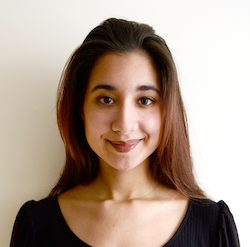
Maya Brennan
I chose to study at UL both for its amazing campus facilities and its unique selection of courses. UL is one of only a small handful of colleges in Ireland that offer my course (Product Design) and I have enjoyed every minute of it.
When I was deciding on a future career, I was torn between studying Art or Engineering. Then I discovered Product Design and Technology, the perfect mix of both! I was first drawn to the course’s hands-on approach to teaching, as there seemed to be a great balance of lectures, labs and workshops.
Product Design and Technology has a really great variety of modules. I especially enjoyed our Design Studio modules, where we learned about sketching, model making, graphics, problem solving and computer aided design. The best part is that we have our own studio space, workshop and computer lab open to all product designers.
Once of the best things about Product Design is that I was constantly pushed to learn different skills and explore new ideas. Each project allowed me to express my creativity, broaden my skillset and work with super talented people. The course also presented me with huge opportunities like winning the AutoCAD Design Student Award in first year, and the Johnson & Johnson’s Women in STEM2D Scholarship in second year.
I was lucky to go on Erasmus last year, to the world-famous TU Delft in Holland. Although my travels were cut short by the COVID-19 pandemic, it was still an incredible experience. In the weeks I was there, I learned so much about design and dutch culture – I also made loads of new friends from all around Europe.
Outside of my studies, I have always enjoyed taken part in UL’s vibrant student life. The campus is fun and modern, with everything from restaurants, lecture halls and student villages all at walking distance from eachother. When I first started out at UL, I made loads of friends by joining the Drama Society and becoming First Year Rep. After that, I joined the Dance Society which was a great way to meet new people and stay in shape during my studies.
Chris Barrett
My initial draw to UL was the intriguing product design studio. At the open day, I was enthralled by the exciting studio environment, with busy students sketching, prototyping and photographing concepts.
The practical elements of sketching, model-making and prototype testing are complimented by a learned ability to create digitally through apps like Photoshop or Illustrator to CAD modelling on Solidworks. I thoroughly enjoy our Design Studio modules, where we, the students, have a large amount of creative control and can a guide a project in whatever direction we’re interested in. In terms of technology, we have 3D printers, CNC machines and a laser cutter at our disposal, which are working non-stop developing prototypes.
A hugely rewarding element of product design is that by your third year, you’ll have a portfolio of work to an industry standard. This is brilliant for students, as it differentiates us from other courses, where we have a physical, tangible output at the end of every project.
In second semester of third year, I did a four-month internship with Circular Design Europe in Barcelona. I worked on a team of students from all around the globe, creating sustainable solutions for international clients. I can safely say it was the best few months of my life, with some unforgettable experiences. We’re blessed in UL to have this opportunity to travel and it’s genuinely the most enriching thing you could do.


Grainne Tyrrell
Gráinne grew up in East Cork and moved to Limerick in 2018 to undertake her Bachelor’s degree. She graduated with an honours degree in Product Design and Technology in 2022. During her cooperative programme with Medtronic, she found her interest in biomedical design, and continued to pursue this field. Her Final Design Project was devised to meet procedural needs associated with an alternative approach to minimally invasive heart procedures for particularly vulnerable patients. The design output was a multistage access and closure device which leveraged ultrasonic cautery techniques.
Upon graduation she was successful in acquiring funding from the Irish Research Council’s EPS Scheme to undertake a PhD within the School of Design. With the support of Medtronic as an Enterprise Partner, Gráinne’s research is focusing on the Usability and Ergonomics of cardiovascular devices, with the goal of optimising the user experience and improving patient outcomes. She enjoys climbing and mountaineering, and throughout her time in UL she has been highly involved in Clubs and Societies acting as President of the Outdoor Pursuits club in 2022.